
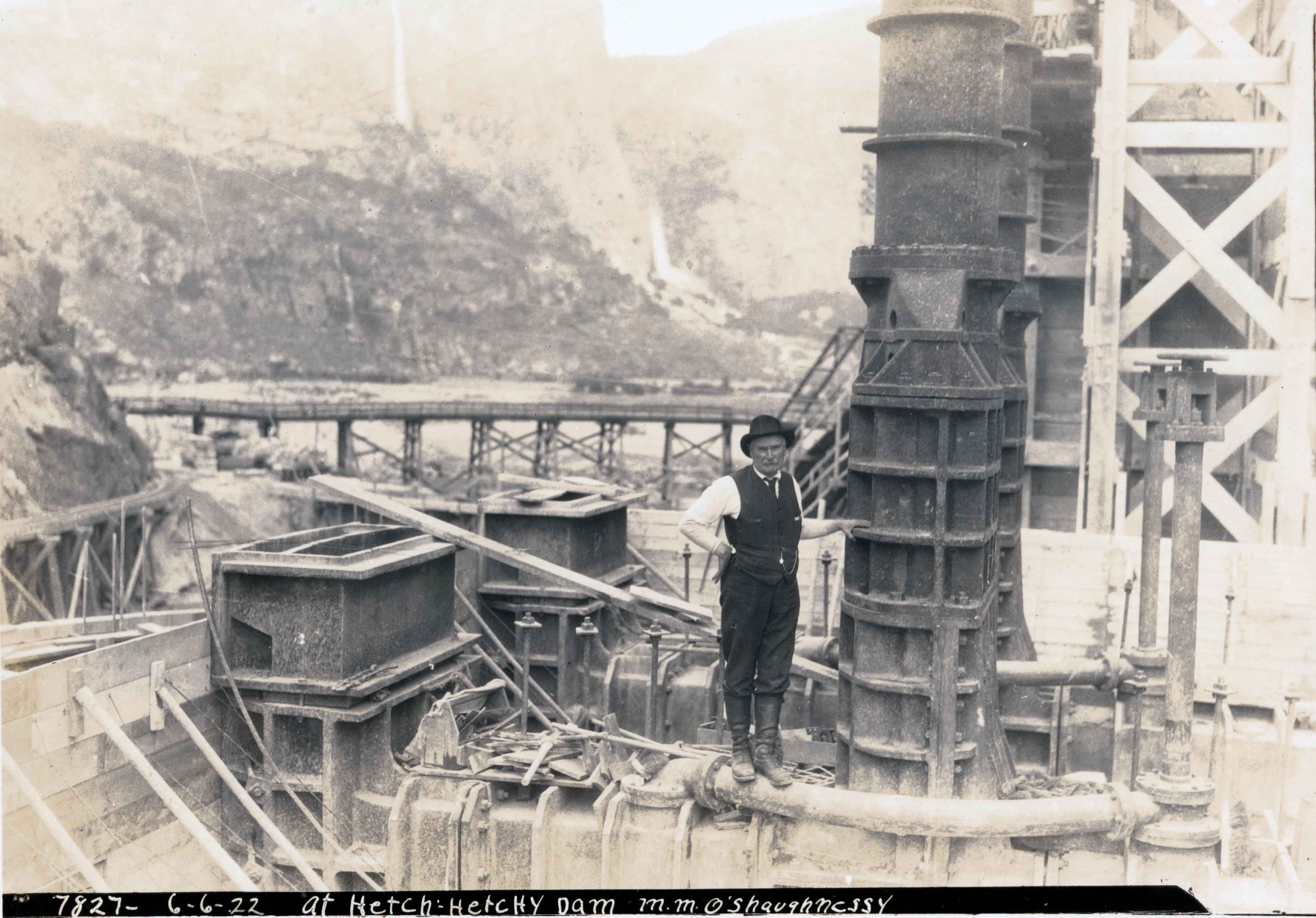
 Michael O’Shaughnessy at the dam. Courtesy of the University of California, Berkeley, Bancroft Library.
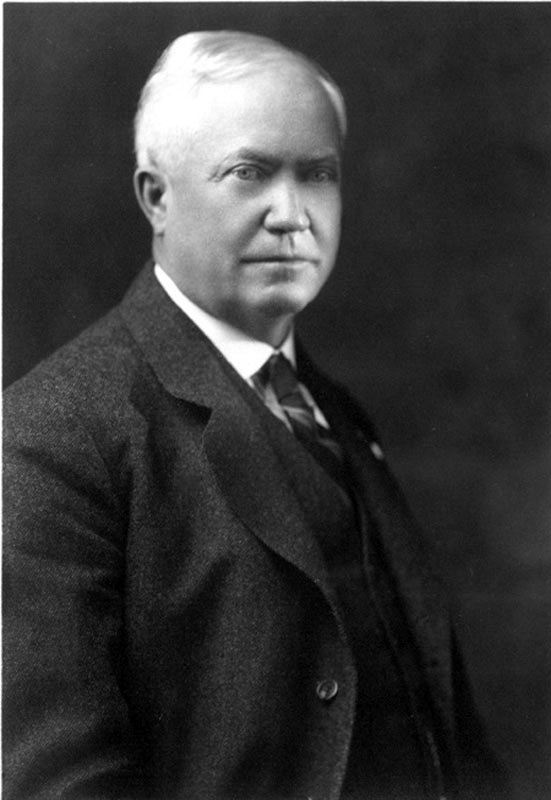 W.H. Wattis.
During a three day long adventure, the dam at Hetch Hetchy was dedicated on July 7, 1923. The dam was renamed after the man who built San Francisco’s “drinking pond”—O’Shaughnessy. Along with officials from the Bay Area, William H. Wattis, President of Utah Construction Company was also present and turned the dam over to San Francisco Mayor James Rolph Jr. Mr. Wattis expressed satisfaction that the structure is to be known as the O’Shaughnessy Dam, saying that those who had been in touch with the operations for the past several years realized that the character of M. M. O’Shaughnessy had dominated the work in all its details and that his name and character deserved to be associated for all time with the splendid civic improvement. He referred incidentally to some of the difficulties of the construction company, saying among other things that it has been necessary to build a dam downward from the stream bed almost as great in extent, and much more difficult in the matter of construction, than the visible part now raising about the stream bed. He also expressed satisfaction over the fact that the enterprise had been carried through with practically no difficulties or disputes with laborers; he complimented the labor unions of California on their fair-minded attitude toward this work.
There is not a weak spot in the entire structure; in my judgment it is the foundation unit of a splendid enterprise, one that will be of lasting and inestimable benefit to this city and state. I am thankful for the privilege of having the name of the Utah Construction Company appear on this bronze tablet as the builder of the dam; it is a monument that will last; it is firmly anchored deep into the bedrock of these eternal hills and while they stand the O’Shaughnessy dam will stand.
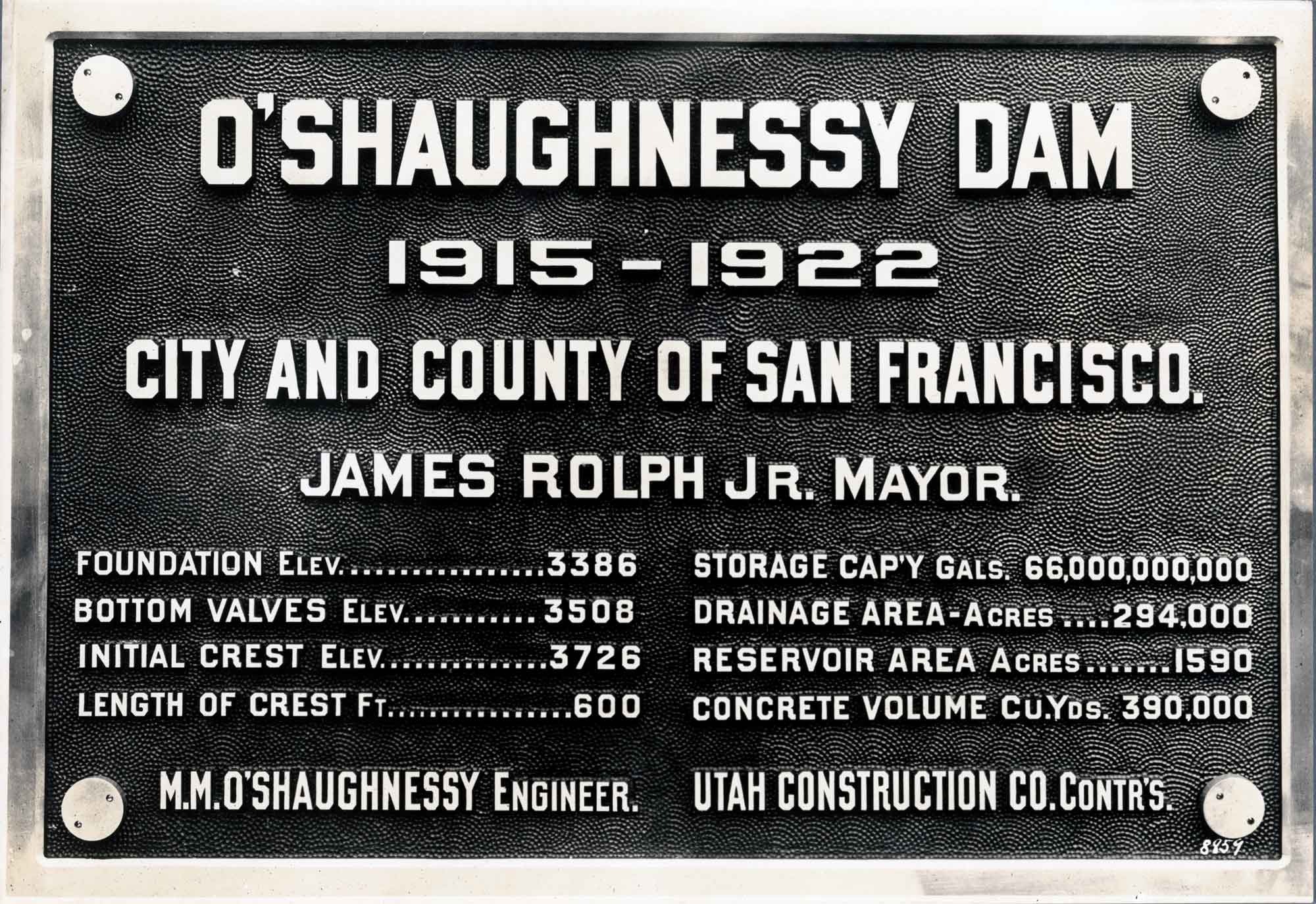 Plaque placed during the dedication of the dam. Courtesy of the University of California, Berkeley, Bancroft Library.
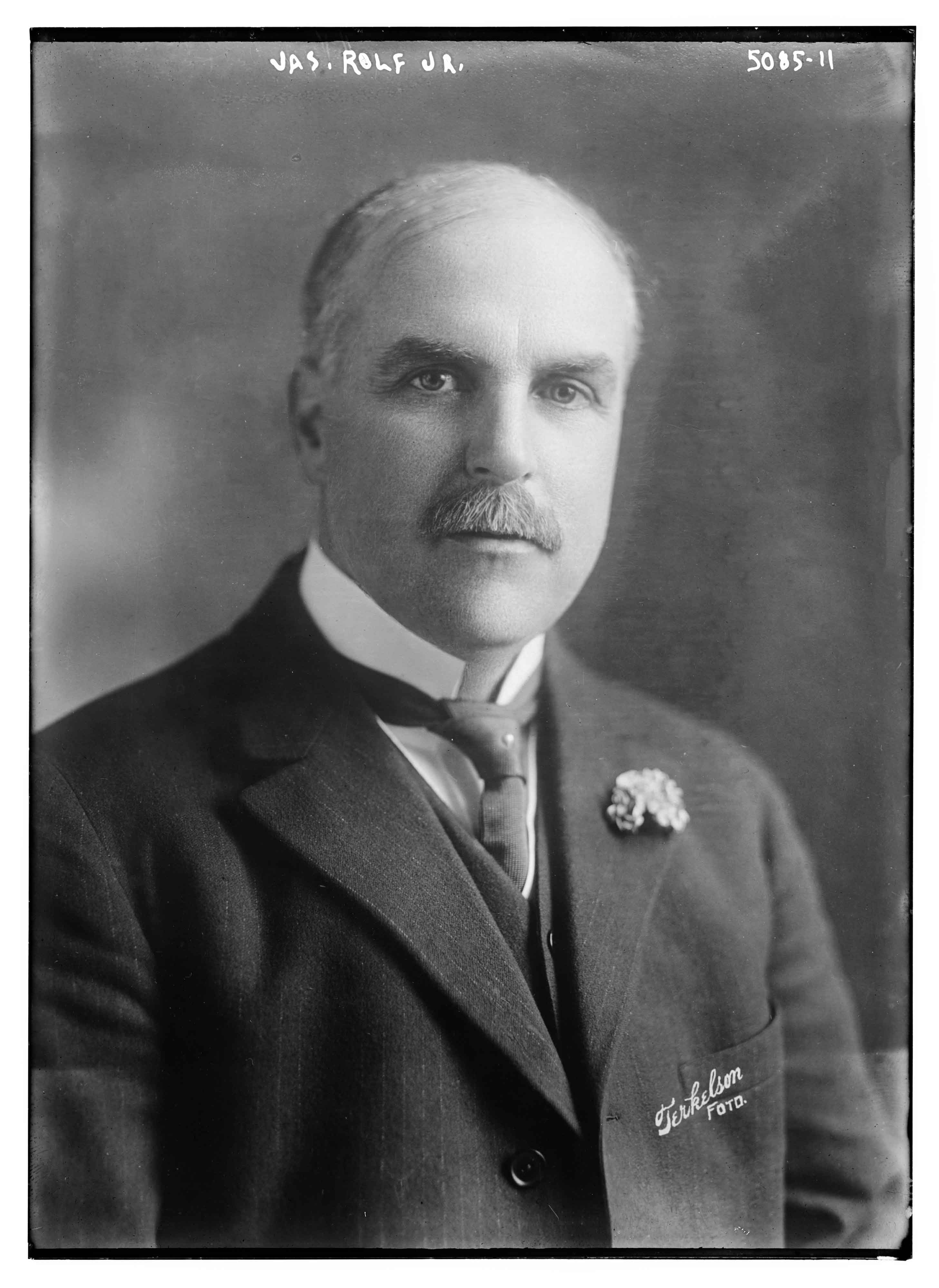 Mayor James Rolph. Courtesy of the Library of Congress.
Mayor James Rolph followed up with the following remarks as he renamed the dam: “The people of San Francisco pay tribute of admiration and respect to M. M. O’Shaughnessy, City Engineer, as we dedicate O’Shaughnessy Dam; the master work of a great career, destined to stand throughout the centuries as one of the mightiest structures built by man. A great knowledge and wide experience, the genius to create, an inspired vision of the California of the future, and a courage undaunted by the sheer magnitude of the undertaking, have enabled “Chief” O’Shaugnessy to carry on this public enterprise, fraught with beneficence for the people of our own city and of our broad coastal empire. Our Chief Engineer is more than a scientist and a builder. He has the lovable qualities of kindness and unselfishness. He is one of the great souls of our own generation. O’Shaughnessy Dam is a monument to his genius. It serves its useful purpose now and will endure for all time. But we who know its builder think both of the work and of the man, and while we dedicate the one we salute the other, offering our gratitude and affectionate regard.”
Michael O’Shaughnessy was the last speaker of the ceremony and talked about the construction of the momentous structure and the legacy.
“We are all glad to be here today to participate in the pleasure of dedicating this great structure, which is 341 feet in height from the bottom of the foundation to the present crest. One hundred and fourteen feet of the foundation work is submerged at the present time with water on the downstream side.
I feel extremely flattered by the very touching remarks made by Mayor Rolph in relating my association with this work. It would not be fair, however, without distributing the credit for the successful completion of this project to the different other men and assistants that have been associated with its success.
The thought was suggested that we had no foundation for a dam of any kind. Others suggested that we move down the canyon half a mile. Many others suggested we use motor trucks instead of steam cars for handling our plant and equipment, and many others threw rocks through the plate glass windows for the pleasure of hearing the cracking glass, but in spite of all the critics this work has been carried to a final achievement. My hope is that the future people of San Francisco will treasure it and guard it as one of their greatest inheritances.”